.png)
How to Choose a Toy Sourcing Company in Asia: A 2026 Buyer's Guide
Sourcing company, trading company or agent? How to vet a toy sourcing partner in Asia and where Vietnam, China and Indonesia fit in 2026

Production capability, quality benchmarks, and the untapped growth potential that sourcing teams need to know
By Play Trail | February 2026
Vietnam's licensed gaming collectibles manufacturing sector has moved past the proof-of-concept stage. The country is now among the world's top five toy exporters, with toy exports reaching an estimated $3.76 billion in 2024 - and gaming collectibles are a growing slice of that volume.
At Play Trail, we've spent years on the ground in Vietnam helping brands source action figures and character plush for the US and EU markets. What we're seeing today is a manufacturing base that has crossed a threshold: the factories are certified, the products are already on Western retail shelves, and the trade agreements are creating cost advantages that didn't exist five years ago.
This post breaks down what sourcing teams need to know - where Vietnam's capabilities are strongest, which gaming collectibles are already in production, and where the biggest growth opportunities sit for brands willing to move now.

Vietnam is already a collectible manufacturing hub. Major toy and collectible brands are producing licensed gaming products in Vietnamese factories today, and those products are sitting on shelves at Target, Amazon, and specialty retailers across the US and Europe.
Vietnam's leading toy OEM facilities operate 550+ injection molding machines, employ a workforce of 10,000–15,000+ workers, and can output up to 9 million units per month. These are fully integrated operations running injection molding, metal die-casting, spray-paint lines, pad printing, assembly, and packaging under one roof.
For plush and soft goods - a category that keeps growing for gaming IP like Pokémon, Minecraft, and Five Nights at Freddy's - the capability is just as deep. Vietnamese plush facilities run 1,000+ sewing machines with computerized embroidery systems of 60+ heads, producing 400,000 to 900,000 pieces per month. Several hold Disney ILS accreditation, one of the toughest quality benchmarks in the industry.
Vietnam's plush and soft goods sector may be its strongest card for gaming collectible brands right now, combining textile expertise, competitive pricing, and the certifications that licensors require.
The strongest argument for Vietnam as a gaming collectibles sourcing destination is the product that's already on the market. Here are confirmed examples of gaming IP manufactured in Vietnam and sold in Western and Japanese markets since 2020.
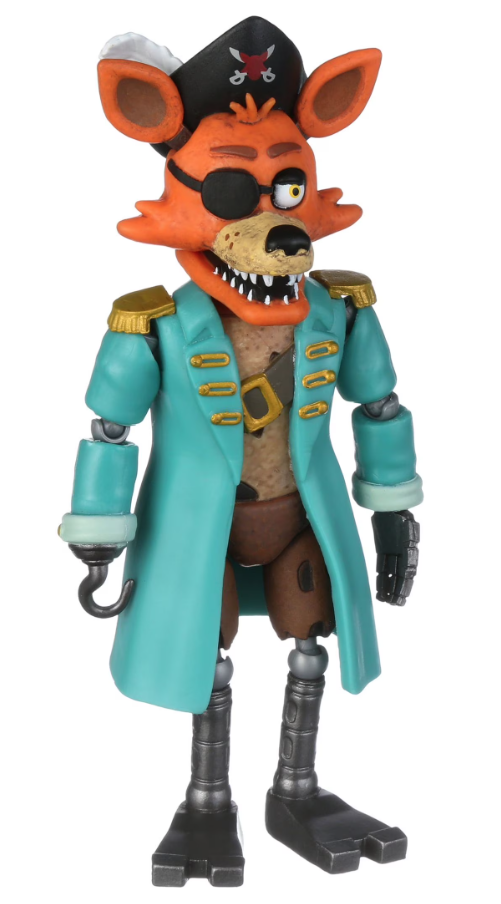
Pop! Vinyl gaming lines are among the most visible examples. Sonic the Hedgehog (multiple characters, including 6-inch Super-sized editions), Five Nights at Freddy's (Foxy the Pirate and others), and Yu-Gi-Oh! figures have all been manufactured in Vietnam and distributed through major US and EU retail channels.
On the articulated figure side, Japan's leading action figure lines have started shifting production to Vietnam. Dragon Ball Z's Jiren figure (2020) marked a notable shift - a premium articulated figure in a major Japanese line produced in Vietnam rather than China.
Retro-style and nostalgia-driven gaming figures are also in production across Vietnam's northern provinces, serving both US specialty retailers and mass-market channels through established OEM partners.
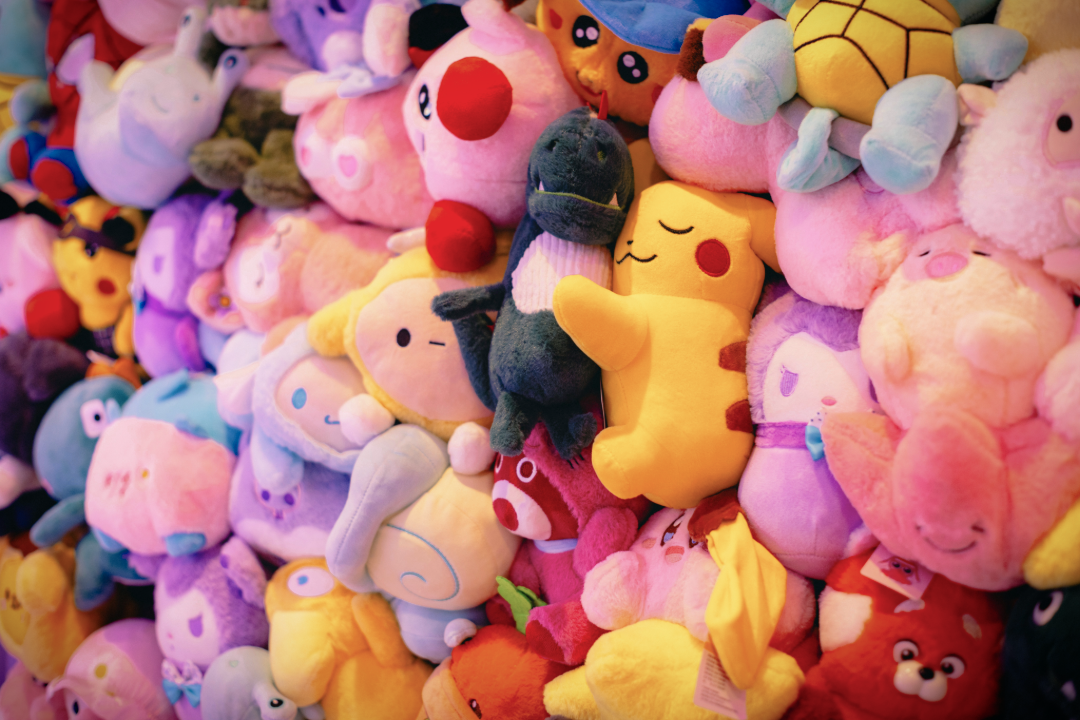
Pokémon Center Original plush toys are confirmed Made in Vietnam. Pikachu, Pichu, Raichu, Chimchar, and Shaymin plush are sold through Pokémon Center Japan, Amazon US, and specialty retailers. This shift started as early as 2018 and has scaled up considerably post-COVID.
Minecraft character plush - including the 2024 Armadillo figure - are produced in Vietnam for US retail. Horror gaming plush from Five Nights at Freddy's (Security Breach Glam Rock Freddy, Shadow Freddy, and Bonnie lines) are manufactured in Vietnam and widely available at US retailers.
The migration pattern extends well beyond gaming. Hasbro has been one of the most aggressive major toy companies in diversifying manufacturing away from China. In 2012, nearly 90% of Hasbro's global production came from China. By 2020, China's share of Hasbro's US-market production had dropped to around 50%, with a target of under one-third by 2023. Vietnam has been a key beneficiary of that shift, with Hasbro expanding into multiple Vietnamese factories in the process. The Transformers line - a franchise with deep gaming IP crossover - has largely shifted to Vietnam for new releases.
These are strategic, long-term moves by the world's biggest toy companies. Gaming collectibles are part of that shift. You can read more about this shift here
The first question every new client asks us: "Can Vietnamese factories actually meet our compliance requirements?" For vinyl figures, action figures, and plush, the answer is yes across all three major export markets.
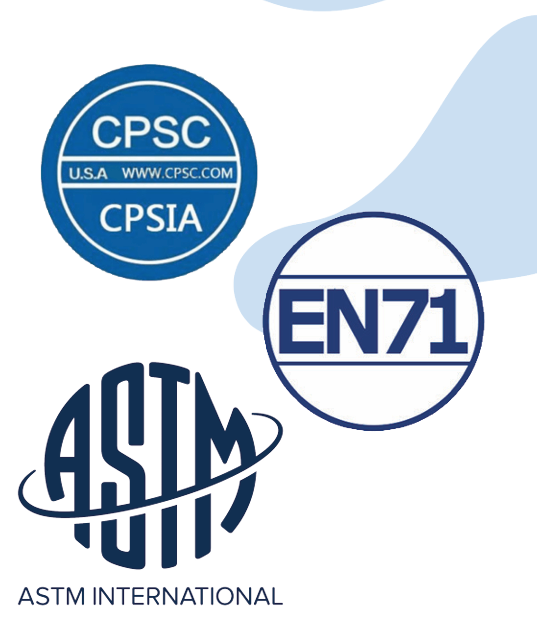
Vietnamese OEM toy exporters routinely produce products that meet ASTM F963 (the US toy safety standard) and CPSIA (Consumer Product Safety Improvement Act) requirements. Testing runs through CPSC-accredited third-party labs operated by SGS, Intertek, Bureau Veritas, Eurofins, and HQTS - all of which have operations or partnerships in Vietnam.
EN 71 (Parts 1, 2, and 3) testing and CE marking are standard among export-focused Vietnamese manufacturers. The EU-Vietnam Free Trade Agreement (EVFTA) has accelerated this, as factories invest in EU compliance to capture tariff-free access to European markets.
Several Vietnamese manufacturers hold ST Japan (Parts 1, 2, 3) certifications for direct export to the Japanese market - important for gaming brands that distribute character goods in Japan alongside the US and EU.
The certification profile at Vietnam's leading toy factories now matches top-tier Chinese facilities. Certifications commonly held include ICTI Ethical Toy Program (IETP) Class A, ISO 9001:2015, Disney ILS/FAMA accreditation, Global Security Verification (GSV), Walmart FCCA, C-TPAT/SCAN, BSCI, and NBC Universal approval.
One telling detail: the ICTI Ethical Toy Program opened a dedicated office in Ho Chi Minh City, reflecting Vietnam's position as the world's third-largest country by number of certified toy factories.
For vinyl figures, PVC action figures, and plush, the certification gap between Vietnam and China has closed.
Beyond factory capability, Vietnam offers something China doesn't: 18 active or planned free trade agreements that change the math on exporting collectibles to the world's largest consumer markets.
The EU-Vietnam Free Trade Agreement (effective August 2020) is eliminating 99% of tariffs over a 10-year phase-in. At launch, the EU dropped 85.6% of tariff lines immediately. Most toys under HS 9503 carried EU MFN rates of 0–4.7%, with 77% going to zero on day one. Vietnam's exports to the EU have jumped roughly 50% since the deal took effect.
For collectible brands selling into Europe, this creates a measurable landed-cost advantage over Chinese-origin goods.
The Comprehensive and Progressive Agreement for Trans-Pacific Partnership (effective January 2019) opened significant preferential access. Japan eliminated 86% of tariff lines for Vietnamese goods at entry, rising to 90% within five years. Export value using CPTPP certificates of origin has grown significantly since the agreement took effect, with Vietnamese businesses increasingly leveraging preferential access to the Japanese market.
For gaming brands with Japanese distribution - and Japan is one of the world's largest markets for character goods - this is a structural cost advantage worth building around.
The picture is more nuanced. Most toys under HS 9503 carry a 0% base MFN duty rate. While reciprocal tariff discussions have introduced some uncertainty, Vietnam avoids the Section 301 tariffs applied to Chinese imports (25% additional), which can translate to real savings. The tariff landscape continues to shift, but the strategic direction - diversifying away from sole-source China dependency - is well established.
The Vietnamese government adds further incentives: preferential corporate income tax rates (10–17% versus the standard 20%), multi-year tax holidays, duty-free machinery imports, and land rental exemptions across 433 industrial zones and 44 economic zones.
We advise clients on where the market is today and where it's heading. Here are the six areas we think matter most for gaming collectible sourcing teams.
This is Vietnam's strongest category right now. The country's textile and garment industry is one of the most developed in the world, and that expertise feeds directly into premium plush production. Official Pokémon, Minecraft, and FNAF plush are already being produced at quality levels that satisfy licensors and consumers in all three target markets.
For any gaming IP looking to launch a plush line, Vietnam offers the best combination of quality, cost, turnaround, and certification readiness available outside China.
China has historically led in the hand-painting and detail finishing required for high-end collectible figures. That gap is narrowing. Vietnam's young workforce (median age 34) is building skills fast, and the volume of production flowing in from major brands is creating the training pipeline that develops artisan-level capability over time.
Brands willing to invest in supplier development now stand to gain: early movers lock in factory relationships as quality improves, securing capacity and pricing advantages before the market gets crowded.
Vietnam's mold-making ecosystem is growing. Facilities using international-standard tooling (HASCO, DME, FUTABA specs) with mold lifespans of up to 1 million shots are operational. Industrial 3D printing at 0.025mm layer resolution is available for prototyping. Japanese-backed and European joint-venture mold-makers are setting up shop, bringing precision engineering expertise.
Complex tooling may still be sourced externally for some projects today, but for standard action figure and vinyl figure molds, domestic capability is competitive.
Vietnam imports about 70% of its plastic raw materials, including the ABS and PVC resins used in action figures. That share is dropping. The plastics sector includes 3,500+ enterprises generating $5.7 billion in exports annually, and foreign petrochemical companies are expanding local capacity. As domestic supply grows, production costs and lead times will both come down.
For licensed collectibles, IP protection matters enormously. Vietnam's EVFTA and CPTPP commitments include robust IP provisions, and the country's 2024 legal amendments are establishing specialized IP courts. Trademark registration and administrative enforcement have both been strengthened.
We advise every client to register trademarks and designs proactively in Vietnam and to build IP monitoring into supplier agreements. The legal framework is maturing fast, and brands that establish their IP footprint now will be in a stronger position as enforcement continues to develop.
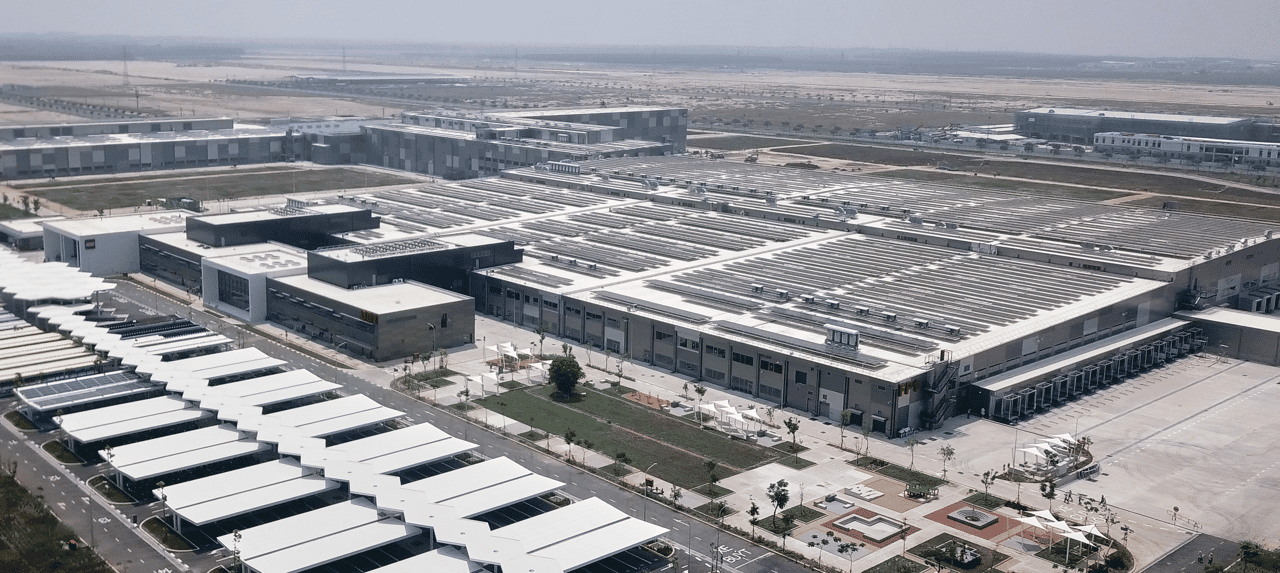
In 2025, the world's largest toy company opened a factory in Binh Duong Province with an investment of over $1 billion - its sixth global facility and its most environmentally sustainable to date, on track to run entirely on renewable energy by early 2026. When the most quality-obsessed brand in the toy industry makes a bet that size on Vietnam, it tells sourcing teams something worth paying attention to.
Based on our experience helping gaming collectible brands navigate this landscape, here's the framework we recommend.
Start with high-volume, standardized SKUs. Vinyl figures, basic-to-mid-tier action figures, and character plush are the categories where Vietnam delivers the most value today. These products benefit from Vietnam's labor cost advantage, established certifications, and proven track record.
Be prepared to move fast with premium collectibles. High-end resin statues, hand-painted scale figures, and complex multi-part pieces need artisan capabilities that are developing very rapidly in Vietnam. Moving early will give you a strong headstart over competitors.
Model your tariff savings. If you distribute in the EU or Japan, Vietnam's FTA network provides quantifiable cost advantages that belong in your landed-cost analysis. These benefits are structural and growing.
Invest in relationships. Vietnam has an estimated 100 to 160 export-level toy factories compared to China's 5,000 to 10,000+. That concentration is an advantage: strong partnerships with certified manufacturers create real leverage on capacity allocation, quality consistency, and priority during peak seasons.
Think in years. The brands doing best in Vietnam today started building supplier relationships three to five years ago. The same will hold true in 2030. The workforce is skilling up, infrastructure is improving, and trade agreements are compounding.
Yes. Vietnamese factories are already manufacturing licensed gaming collectibles for major global brands, including Funko Pop! Vinyl gaming lines, Pokémon Center plush, Minecraft figures, and Five Nights at Freddy's products. These are sold through major retailers in the US, EU, and Japan.
Leading Vietnamese toy manufacturers hold ICTI Ethical Toy Program (IETP) Class A, ISO 9001:2015, Disney ILS/FAMA, Walmart FCCA, C-TPAT/SCAN, BSCI, and NBC Universal approval. They routinely meet ASTM F963 (US), EN 71 (EU), and ST Japan compliance requirements.
Vietnam offers competitive labor costs, and its free trade agreements - particularly the EVFTA (EU) and CPTPP (Japan) - create tariff advantages that reduce landed costs for brands exporting to European and Japanese markets. For US-bound goods, Vietnam avoids the Section 301 tariffs applied to Chinese imports.
Character plush is Vietnam's standout category, backed by deep textile industry expertise. Vinyl figures and basic-to-mid-tier action figures are also well established. Premium hand-painted collectibles are an emerging capability that's improving year over year.
Vietnam has strengthened IP protections through EVFTA and CPTPP treaty commitments and 2024 legal reforms establishing specialized IP courts. Play Trail advises all clients to register trademarks proactively and build IP monitoring into supplier agreements.
Vietnam's gaming collectible manufacturing story is already being written - on retail shelves across three continents. The products are proven, the certifications are in place, and the trade agreements are signed.
What comes next is the growth phase: deeper artisan skills, localized materials, stronger IP enforcement, and more factory capacity. For brands in the gaming collectible space, the question isn't whether Vietnam fits your sourcing strategy - it's how fast you build the relationships that will shape your position over the next decade.
That's what we help our clients do.
Ready to explore Vietnam for your next gaming collectible line? Contact Play Trail for a free sourcing consultation right here on this page