.png)
What Does a Sourcing Agent Do? A Practical Answer for Toy Brands Sourcing in Asia
What a toy sourcing agent does at each stage, from factory vetting to shipment, how agents are paid, and what changed for agents in Asia in 2026.
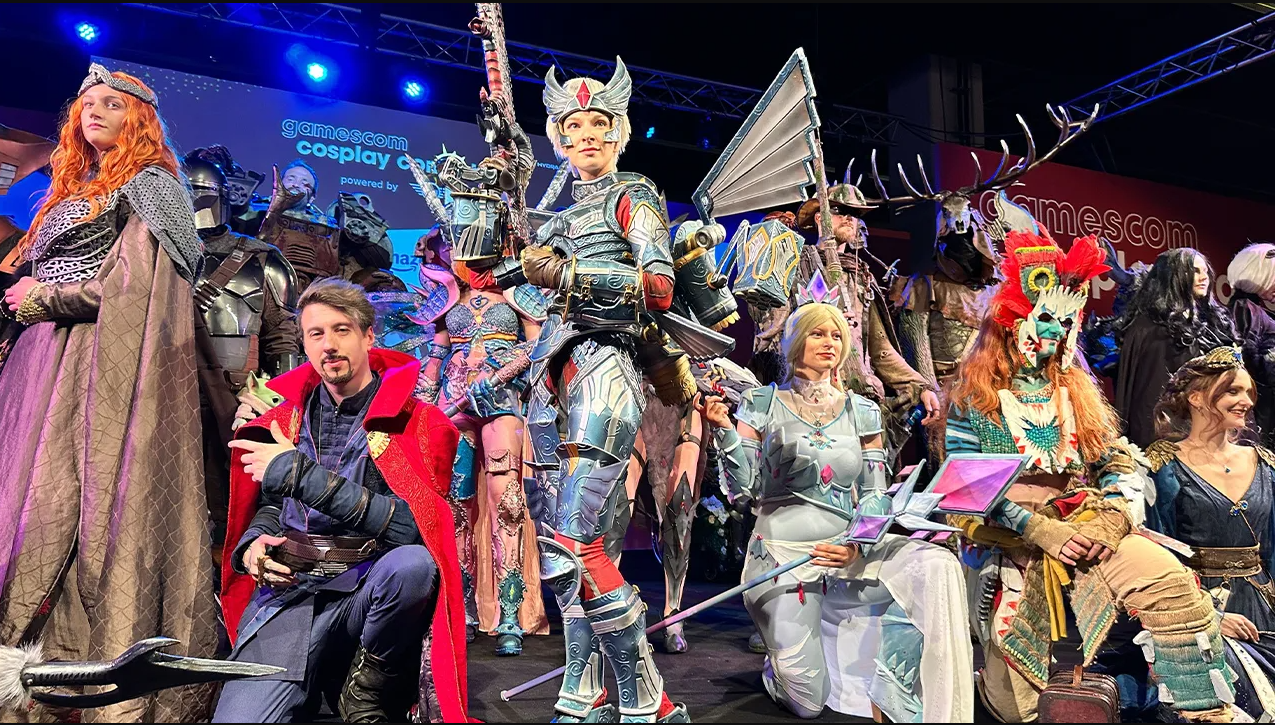
If you're building a cosplay or collectible product line, Southeast Asia deserves a serious look. Vietnam, Thailand, and Indonesia sit within the same regional supply chain yet each does something quite different: Vietnam has the garment factories, Thailand has the jewelry clusters, Indonesia has the silversmiths. You don't have to choose one.
At Play Trail, we've spent years building sourcing networks across all three countries. What follows is an honest breakdown of what each market is actually good at - so you can make smarter decisions about where to put which product.
The manufacturing capabilities here align closely with what cosplay and collectible brands actually need - sewn apparel, EVA foam props, metal hardware, enamel pins, resin casting, bespoke jewelry. These aren't niches that regional factories have adapted to reluctantly. In many cases, the expertise predates the cosplay market itself; it came from footwear, fine jewelry, and film costume production, and it translates directly.
The mistake most brands make is treating the region as interchangeable - Vietnam, Thailand, and Indonesia each do something different. Here's what each one brings.
Vietnam is now the world's second-largest garment exporter, having surpassed Bangladesh in 2024. About 7,000 textile and garment enterprises generated around $44 billion in exports that year - an 11.2% increase over 2023. That output isn't abstract: it means a deep, competitive supply base with factories already tooled and staffed for high-volume sewn goods.
Production is concentrated in the south - Ho Chi Minh City, Binh Duong, and Dong Nai - close to the Cai Mep deep-sea port, one of Southeast Asia's fastest-growing container terminals. The geography keeps lead times and freight costs manageable.
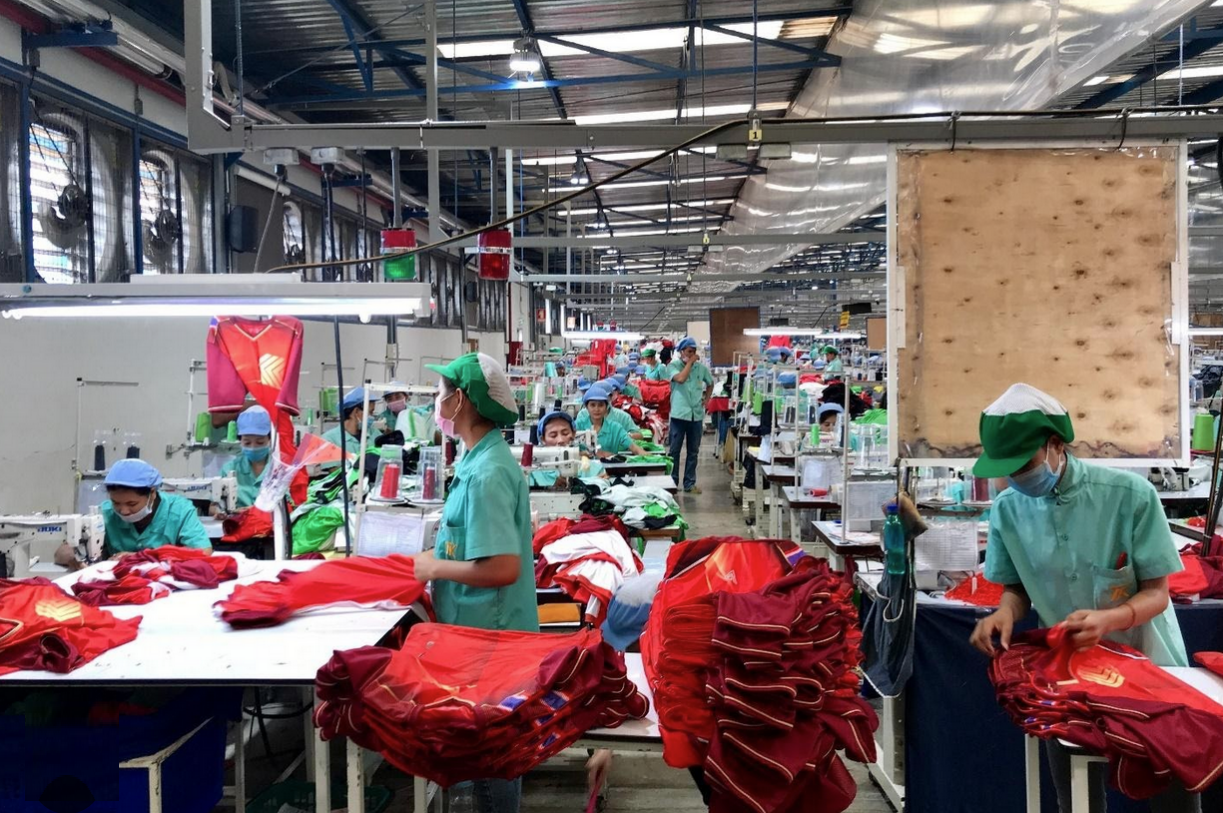
Vietnam isn't just a generic apparel hub. There are dedicated cosplay manufacturers already running at production scale - studios that have spent years making superhero, Sentai, and licensed character costumes for international clients. Smaller workshops around Ho Chi Minh City work well with newer brands too, with MOQs typically starting at 300–500 pieces. You don't need to be moving large volumes to get started. Get in touch and we'll match you to the right fit.
Vietnam is Nike's largest footwear production country. That's relevant here because the same EVA foam used in athletic footwear is the material behind cosplay armor and props - and the infrastructure to cut, heat-mold, and finish it precisely already exists at scale. No other Southeast Asian market can match Vietnam on EVA foam volume.
Getting the output to cosplay spec does require a sourcing partner who knows how to bridge industrial foam suppliers with the finishing requirements of prop work. But the raw capability is there, waiting to be pointed in the right direction.
Factories supplying Nike, Adidas, H&M, Zara, and Uniqlo from Vietnam routinely carry ISO 9001, OEKO-TEX Standard 100, BSCI, SA8000, and WRAP certifications. SGS, Bureau Veritas, Intertek, TÜV, and QIMA all have offices in-country. If you need third-party inspection on every order - and for a new manufacturer relationship, you should - that's not a logistical problem in Vietnam.
The EU-Vietnam Free Trade Agreement (EVFTA) came into force in August 2020. Garments that meet the fabric-forward rules of origin enter the EU at 0% duty. The UK-Vietnam FTA (UKVFTA) runs on the same terms for UK shipments. If you're selling into Europe or the UK, this is a meaningful landed cost advantage over sourcing from countries without equivalent agreements.
Garment MOQs typically start at 300–3,000 pieces, with production lead times running 45–110 days depending on complexity. Sea freight to the US West Coast takes 20–25 days from Cai Mep. Factories across the country routinely carry ISO 9001, OEKO-TEX, BSCI, and WRAP certifications. And for EU and UK buyers, the EVFTA and UKVFTA agreements mean qualifying garments land at 0% duty: a structural cost advantage that compounds over volume.
Thailand is the world's second-largest silver jewelry exporter. Gem and jewelry exports hit $9.6 billion in 2024, up 11% year-over-year. For cosplay crowns, metal costume hardware, buckles, badges, enamel pins, and ornamental accessories, this is the ecosystem you want access to.
The Gemopolis Industrial Estate near Bangkok has over 140 jewelry companies in one place. Some have been running since the 1970s. For premium enamel work - cloisonné, champlevé - artisan producers in the cluster run custom production with MOQs starting at 50–100 pieces. That combination of craft and low entry point is hard to find elsewhere in Southeast Asia.

Thailand has one of the largest cosplay communities in Southeast Asia, and that community feeds directly into who's doing the manufacturing. The prop makers, seamstresses, and artisans here grew up in this world. They understand what a finished costume needs to do at a convention - how it moves, how it holds up, what the seams need to look like under event lighting.
Some studios in Bangkok have 30+ years making film and stage costumes with major IMDB credits; others are run by professional cosplayers who have produced props for studios behind blockbuster film franchises. When a manufacturer has that background, the QC conversation is different from the start. You're not explaining what "convention-ready" means.
Thailand's footwear sector built strong EVA foam capabilities that translate well to prop-making. There are studios that have been doing fiberglass and resin casting for over two decades. Custom foam prop MOQs can go as low as 1–50 pieces from workshop-scale producers. That makes Thailand the right place for premium, small-batch prop work - the kind of order where craft matters more than throughput.
Thailand ranks 34th on the World Bank Logistics Performance Index - the strongest of the three countries covered here. Laem Chabang is a top-20 global container port. Suvarnabhumi airport handles 2–5 day air freight globally. For limited-edition drops and time-sensitive launches, that reliability is worth something.
Garment MOQs run 200–1,000 pieces; for pins and badges, entry points start as low as 50–200 pieces. Garment production lead times sit at 45–60 days, and sea freight to the US West Coast takes 20–28 days. Thailand ranks 34th on the World Bank Logistics Performance Index — the strongest of the three countries in this comparison - and key certifications include ISO 9001, BSCI, and GIT for jewelry work.
The strongest case for Indonesia in this product category isn't made in Jakarta - it's made in Celuk Village, Gianyar, Bali. Balinese silversmiths have been producing sterling silver jewelry for export for decades using lost-wax casting techniques that go back centuries. They've adopted 3D design tools without abandoning the handwork that makes the output distinctive.
For cosplay crowns, tiaras, character jewelry, and ornate accessories, this is a different category of product than what comes off a factory line. The workshops in Celuk already serve international brands - the capability is proven, it just isn't as widely known in the cosplay market yet.
Bali has a quiet but real reputation for boutique garment manufacturing with accessible minimums - some workshops start at 60 pieces per style, and a few have no minimum order at all. If you're testing a new design or running a small seasonal drop, those terms are much friendlier than what you'll find in Vietnam's factory ecosystem.
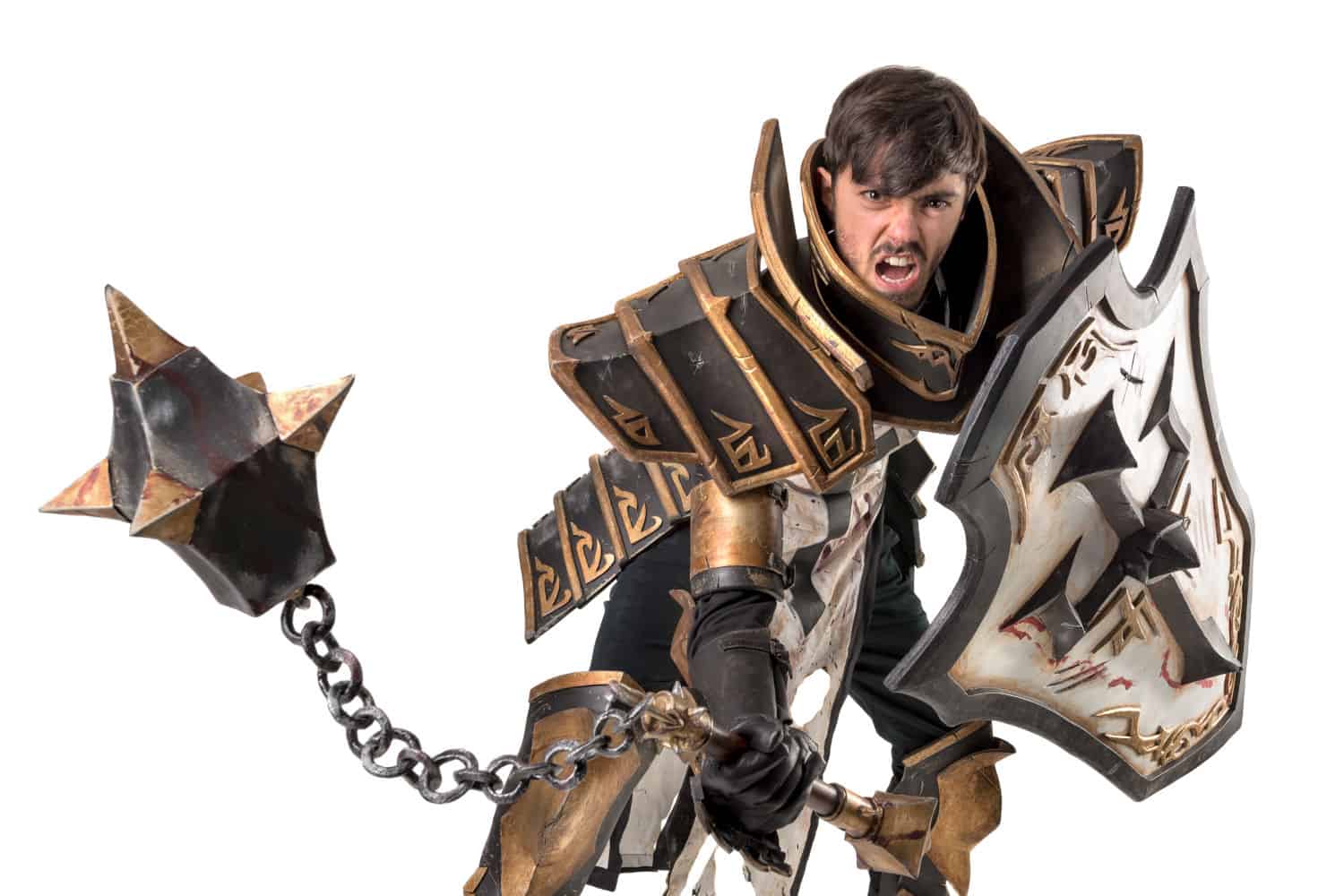
Indonesia's footwear industry is large, and the EVA foam expertise that comes with it is well-established - some producers have been running for over four decades, working with hardness ranges from 35–65 Shore and sheet thickness from 2mm to 50mm. That covers the full range relevant to cosplay armor and props. Cosplay-specific studios are already applying this base material to 3D printing, EVA sculpting, and resin finishing.
Indonesia's pin sector is still developing compared to Thailand's, but there's real production history here - established producers in West Java have been making hard enamel, soft enamel, and casting pins for international clients since the mid-1990s. It's a viable option if you want geographic diversification in your pin supply chain.
Indonesia has the widest wage range of the three countries - roughly $126/month in rural Central Java up to $337/month in Jakarta. For high-volume, price-sensitive production, that cost floor is the most competitive in this comparison.
Garment MOQs are the most accessible in the region, starting at 60–1,000 pieces in Bali, with some workshops carrying no minimum at all. Monthly labor costs range from around $126 in rural Central Java to $337 in Jakarta — the widest and most competitive wage range in this comparison. Production lead times for garments run 45–75 days, and sea freight to the US West Coast takes 22–30 days. Certifications include ISO 9001, OEKO-TEX, BSCI, and SA8000. Bali's standout specialty is lost-wax silver casting alongside boutique apparel production.
The routing logic is fairly straightforward once you've mapped your product categories. Volume cosplay costume and apparel production belongs in Vietnam; if you're testing new designs or running small-batch drops, Bali is the more accessible entry point. For foam armor and props, Thailand is the right call when craft and finish quality are the priority, while Vietnam handles industrial-scale foam output. Metal accessories, cosplay crowns, and costume hardware are best sourced from Thailand's jewelry cluster; for silver jewelry, tiaras, and ornate cast pieces, Bali's silversmithing tradition is in a category of its own. Enamel pins and badges point back to Thailand. And if you're supplying the EU or UK market, Vietnam's EVFTA and UKVFTA agreements make it the natural anchor for those supply chains.
Play Trail is based in Vietnam with active networks in Thailand and Indonesia. We work with cosplay brands, collectible retailers, and toy companies - handling manufacturer identification, quality assurance, and the logistics of production spread across multiple countries.
If you're starting your first cosplay line, scaling an accessories range, or trying to bring your supply chain into Southeast Asia, we can help you figure out what goes where.
→ Get in touch with Play Trail now by fill in the form
Yes, particularly in Bali and Thailand. Several manufacturers work with MOQs of 50–100 pieces, and some Bali workshops have no minimum at all. Vietnam works better once you're ready to move 300+ pieces per style.
Garment production is 45–110 days depending on complexity and country. Sea freight to the US West Coast runs 20–30 days; to Europe, 25–35 days. All three countries offer air freight for urgent orders.
Vietnam and Thailand both have factories with ISO 9001, BSCI, and OEKO-TEX certifications that meet standard licensor requirements. Bring your licensing terms to the initial conversation - don't wait until production starts.
SGS, Bureau Veritas, Intertek, TÜV, and QIMA all operate in all three countries. Pre-shipment inspection on every new manufacturer relationship is standard practice, and we'd recommend it regardless of how strong the factory's reputation is.
Thailand, specifically the Gemopolis cluster in Bangkok. Hard enamel, soft enamel, cloisonné, and champlevé production with MOQs starting at 50–100 pieces. Indonesia also has established producers if you want to spread your supply chain across the region. Reach out to Play Trail and we can point you to the right fit for your spec and volume.
No. Vietnam is home base, but we run active sourcing across Thailand and Indonesia. Multi-country production is something we coordinate regularly - including shipment consolidation where it makes logistical sense.
Play Trail is a Southeast Asia-based sourcing partner specializing in toys, cosplay, and collectibles, with networks across Vietnam, Thailand, and Indonesia.


.png)