.png)
How to Choose a Toy Sourcing Company in Asia: A 2026 Buyer's Guide
Sourcing company, trading company or agent? How to vet a toy sourcing partner in Asia and where Vietnam, China and Indonesia fit in 2026
Southeast Asia's toy market is valued at $6 billion and growing. Yet most international toy brands still rely on the same market entry playbook from twenty years ago: appoint a local distributor, hand over the products, and hope for results.
That approach has a ceiling. Toy brands serious about Vietnam - those building an offshore design team, developing products closer to the factory floor, and working toward full ownership - need a smarter strategy. Increasingly, that strategy is Build-Operate-Transfer (BOT).
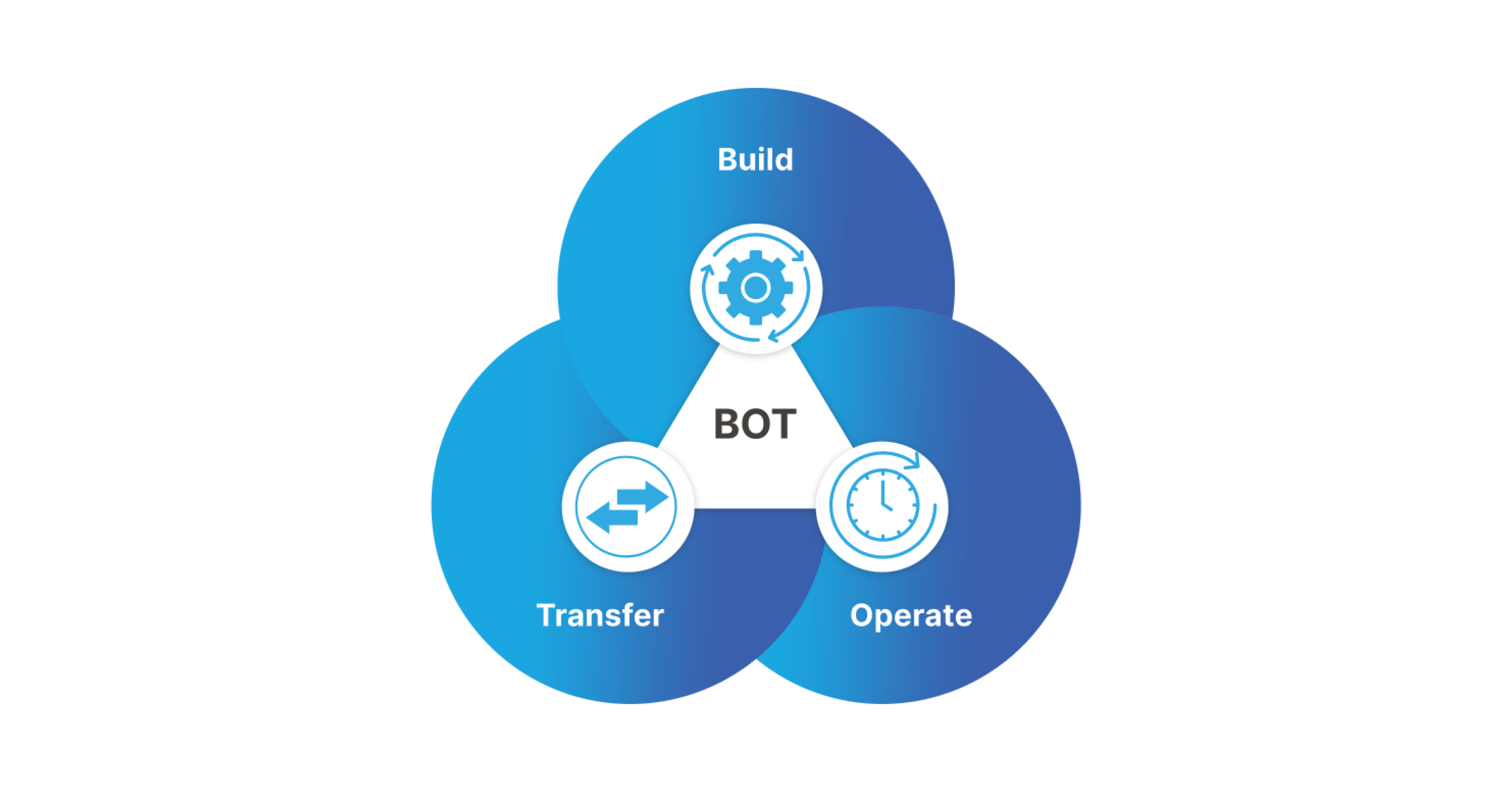
Build-Operate-Transfer didn't originate in the toy industry. The BOT model was first used in 1990s infrastructure projects (toll roads, power plants, water treatment facilities), where a private operator would build and run public infrastructure before transferring it back to the government. The tech outsourcing sector adopted it next to launch offshore development centres. Today, the BOT model is finding a natural home in toy design and sourcing in Vietnam.
For a foreign toy brand, the challenge of building in Vietnam is real. Setting up a legal entity, navigating Vietnamese labour law, recruiting experienced designers and product engineers, sourcing workspace, and managing cross-border payroll all take months, significant capital, and deep local knowledge most brands don't have. Attempt it alone too early and the mistakes are expensive. Stay permanently dependent on third-party distributors and you never build an asset you own.
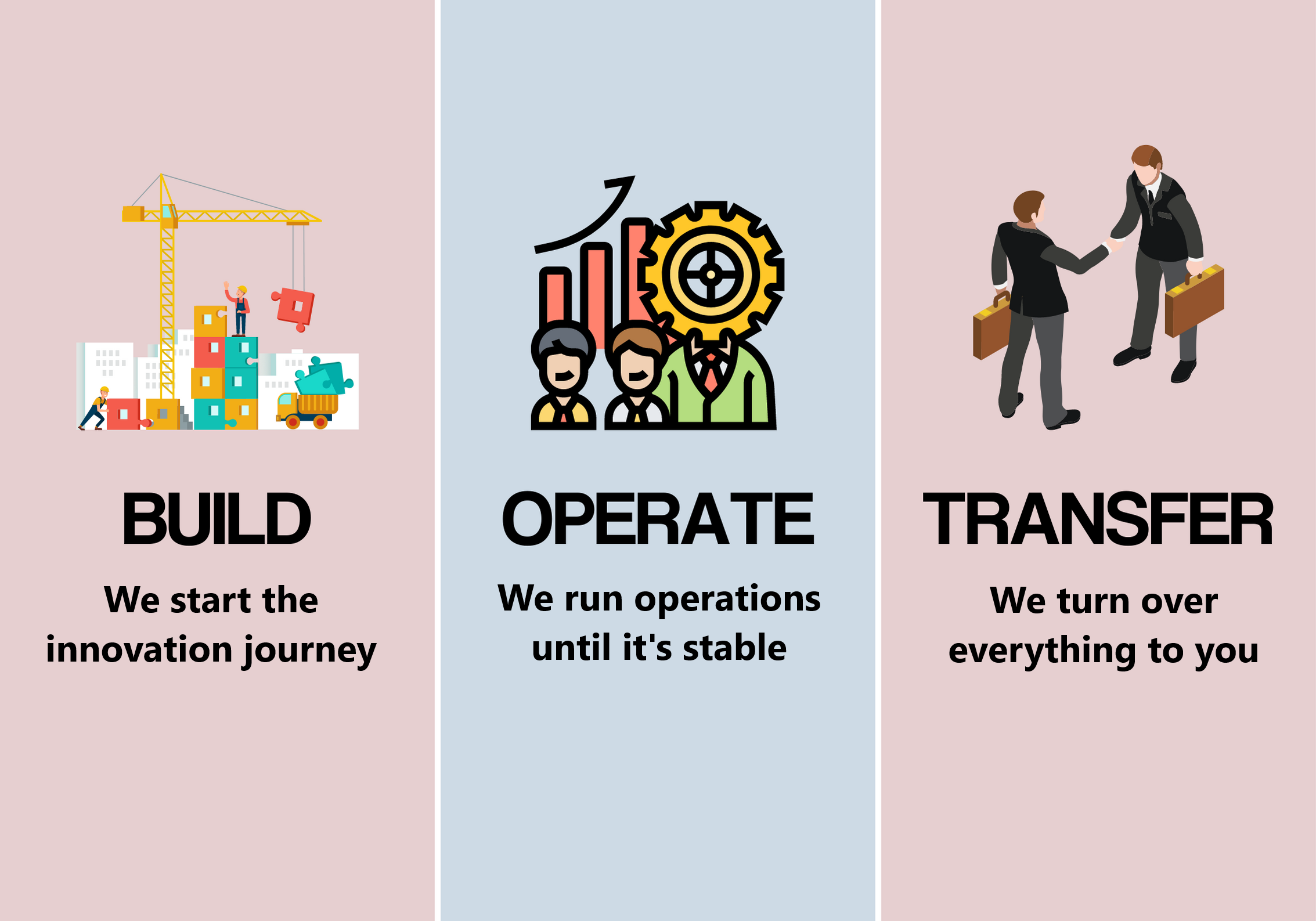
BOT for toy brands threads the needle. A local partner builds the offshore team and infrastructure on your behalf, operates it to your specifications while managing all administrative burden, and transfers the entire operation to you once you're ready to take full control.
The Build phase is where the right partner makes all the difference. For a toy brand establishing an offshore design team in Vietnam, this means recruiting product designers, packaging specialists, and sourcing managers who understand how the local factory ecosystem works. It includes securing workspace, setting up IT infrastructure, establishing employment contracts compliant with Vietnamese labour law, and embedding your new team into your culture and workflows - all before committing to a permanent legal entity in-country.
Done well, this phase compresses what would otherwise take six to twelve months of costly trial and error. Done poorly - with a partner who doesn't understand toy-specific roles or the local talent market - it produces a team that looks right on paper but can't deliver.
The Operate phase is where real value is created. Your partner manages day-to-day operations: payroll, HR, performance reviews, IT support, workspace, and regulatory compliance. You manage the work itself: creative direction, design approvals, the sourcing pipeline, and quality standards. The division is clean. You get the output of a dedicated in-house offshore design team without the overhead of being the employer of record in a country you're still learning.
This phase typically runs two to four years. It needs to be long enough for the team to become genuinely embedded in your workflows and for you to build the institutional knowledge required to operate independently. Cut it short and the transfer stumbles. Drag it out too long and incentive alignment begins to erode.
The Transfer phase is the exit ramp to full ownership. The team, contracts, operational knowledge, and institutional relationships all move across to your entity. With transition support built into the BOT arrangement from day one, it feels less like an abrupt handover and more like a formality acknowledging what was already true: the team was yours all along.
The case for Vietnam as a toy design and sourcing hub has never been stronger.
Trade agreements have reduced import costs significantly. Under CPTPP (in force for Vietnam since January 2019) and EVFTA commitments, import duties on toys have been dramatically cut. Vietnamese-origin products are substantially more competitive in global markets than they were five years ago.
Foreign ownership is fully permitted. Vietnam's Law on Investment 2020 allows 100% foreign ownership in manufacturing and distribution. You don't need a local partner for legal reasons - which means when you choose one, it's because they genuinely add value.
The talent pool is deep and proven. Vietnam's toy manufacturing and design talent has matured considerably over the past decade. Product designers, packaging engineers, and quality specialists who developed their skills on projects for global toy brands are available in Ho Chi Minh City - at a cost substantially below equivalent talent in Europe or the US.
Global brands are already moving in. Unilever entered Vietnam through a joint venture in 1995, grew at 20% annually for fourteen years, and completed its full buyout in 2009. LEGO invested $1,3 billion in a Binh Duong manufacturing facility that opened in 2025. A toy brand building an offshore design team through BOT is making a structurally similar long-term bet - at a fraction of the upfront commitment.
Play Trail was built specifically for the toy industry - and that matters more than it might initially appear. Generic offshore staffing providers can set up a back-office team almost anywhere. Building and managing a team capable of contributing meaningfully to toy design, product development, and supply chain management in Vietnam requires industry-specific knowledge that most HR firms simply don't have.

Play Trail's BOT engagement begins with a detailed brief covering the roles you need, the skills required, your team size, and what your design and sourcing pipeline looks like in practice. Recruitment draws on a network built through years of operating inside Vietnam's toy and manufacturing ecosystem - not a generic job board search. Every hire is made with a clear understanding of what toy product development actually demands.
Once the team is in place, Play Trail handles everything operational: payroll, legal documentation, work permits, Vietnamese labour law compliance, fully equipped workspace, IT infrastructure, and ongoing HR services including annual performance reviews tied to your KPIs.
Your team works in your direction. Play Trail manages everything that keeps them employed, equipped, and legally compliant. Scalability is built in from the start - headcount can flex to match product development cycles without the rigidity of a fully-owned subsidiary.
When the time comes to transfer, Play Trail facilitates the full handover - covering the team, operational knowledge, and all legal and administrative procedures - with continued support through the transition period. By the time you formally take ownership, nothing materially changes for the team or the work. Only the entity on the employment contracts.
We have successfully built and transferred a large augmented team for Moose Toys after 5 years of running it, and we have been the dedicated outpost for 2D and 3D design for Just Play since 2021.
The alternative to a structured BOT approach isn't "nothing." It's usually expensive improvisation. Toy brands that attempt to build directly in Vietnam without local expertise encounter the same cluster of problems: slow and costly recruitment, compliance missteps that create legal exposure, workspace arrangements that don't scale, and staff turnover from teams that never felt connected to the brand's culture.
Analysis of BOT arrangements in emerging markets points to a 15–30% lifecycle cost premium over direct market entry. That premium is real - and worth paying. What it buys is the absorption of early-stage risk by a partner who has already worked through the costly mistakes and knows how to avoid repeating them.
Staying permanently dependent on third-party distributors carries its own costs: IP leakage, limited brand control, no accumulation of institutional knowledge, and a supplier relationship where leverage eventually inverts.
The toy brands best suited to the BOT model share a few common characteristics. They have genuine long-term ambition in Vietnam - not just a short-term project. They have differentiated IP and creative vision they want to protect. They understand that building a real offshore presence takes three to five years, not three to five months. And they're clear-eyed about the gap between wanting to operate in Vietnam and actually knowing how to do it.
If that describes your business, the starting point is a conversation about what your offshore design team needs to accomplish - the design capabilities, sourcing expertise, and development pipeline - and working backwards to the team structure that makes it possible.
Vietnam's toy design and manufacturing ecosystem is maturing rapidly. The brands that establish a real creative and operational footprint over the next three to five years will be significantly better positioned than those that wait until every structural advantage has already been priced in.
The BOT model exists to make that early commitment manageable. Play Trail exists to make it work.

In toy industry terms, BOT is an arrangement where a local partner - such as Play Trail - recruits and manages a dedicated offshore design or sourcing team on behalf of a foreign toy brand, then transfers full operational control to that brand after an agreed period. It allows brands to build a genuine Vietnam presence without setting up a legal entity from day one.
Most BOT arrangements in consumer goods run three to eight years from inception to transfer. The Build phase takes six to eighteen months, the Operate phase two to four years, and the Transfer itself three to twelve months. The exact timeline depends on team complexity, the brand's readiness to take direct operational control, and agreed performance milestones.
No. Play Trail's BOT service is specifically designed for businesses that want to access Vietnamese talent and establish offshore operations without the immediate burden of setting up a local legal entity. All employment, compliance, and administrative obligations are managed by Play Trail throughout the Operate phase.
Play Trail's BOT service supports toy-specific roles including product designers, 3D sculptors and renderers, packaging designers, sourcing managers, supply chain specialists, and quality control professionals. Because Play Trail operates exclusively within the toy and related product industries, recruitment is grounded in a genuine understanding of what these roles require in practice.
At the agreed transfer point, Play Trail manages the full handover - covering legal and administrative procedures, employment contract transitions, and knowledge transfer - with ongoing support available through and after the transition to ensure continuity for both the team and the business.
Ready to build your offshore toy design team in Vietnam? Contact Play Trail to start the conversation.