.png)
What Does a Sourcing Agent Do? A Practical Answer for Toy Brands Sourcing in Asia
What a toy sourcing agent does at each stage, from factory vetting to shipment, how agents are paid, and what changed for agents in Asia in 2026.
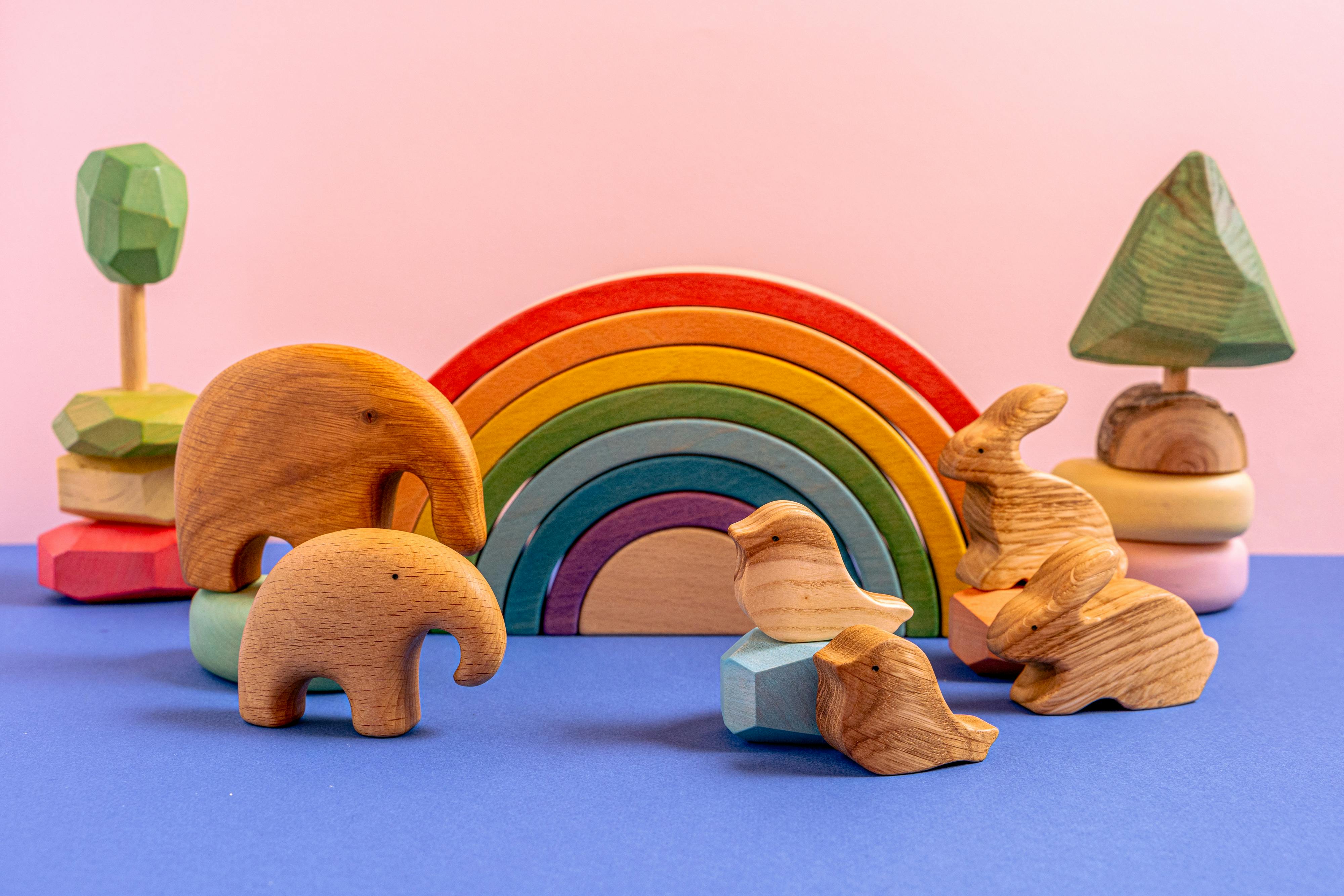
Wooden toy sourcing in Vietnam has become the default choice for serious toy brands exiting China, and in 2026 the case has never been stronger. The global wooden toy market is now valued at $30.41 billion and forecast to reach $38.17 billion by 2030. In January 2026, Spin Master Corp.'s acquisition of Melissa & Doug, one of the most recognizable names in premium wooden toys, confirmed what anyone paying close attention to the segment already knew: it is attracting serious institutional capital, and brands that build verified Vietnamese factory relationships now will hold a supply chain advantage that competitors will take years to replicate.
The Montessori sub-segment alone is growing at 8.7% CAGR through 2033, and 41% of all wooden toy purchases are now Montessori-inspired. Separately, around 58% of parents say they actively prefer eco-friendly toys. For brand owners sourcing this category outside China, Vietnam is not just the most obvious alternative. For wooden toys specifically, it is the strongest manufacturing base in Southeast Asia and one of the most competitive in the world.
This guide covers everything you need to know to source wooden toys from Vietnam in 2026: where factories are located, what they can and cannot produce, realistic MOQs and lead times, the current tariff picture for US and EU brands, the full compliance roadmap, and the red flags that separate credible manufacturers from trading companies.

Most toy categories can be manufactured across multiple countries. Wooden toys are different. Vietnam's edge in this category runs deeper than favorable costs or available capacity.
The country sits on an abundant, plantation-grown raw material base. Acacia and rubberwood are the two dominant species used in wooden toy production. Acacia grows on five to seven year rotation cycles, which keeps supply consistent and costs predictable. Rubberwood is a byproduct of rubber plantations that have completed their latex-producing lifecycle, making it an inherently sustainable and cost-effective input. Both species finish well, hold non-toxic coatings reliably, and meet the durability requirements that international retailers demand.
Vietnam's wood export figures reflect the depth of this infrastructure. In 2024, total wood and wood product exports reached a record $17.3 billion, making Vietnam the world's fifth-largest wood product exporter and the top furniture exporter in Southeast Asia. The country has over 6,000 wood processing and trading companies operating across its industrial zones, serving buyers in more than 120 countries.
The strongest external signal comes from the world's largest toy brands. A major Danish toy company operates a $1 billion factory in Binh Duong Province, running entirely on renewable energy by 2026, citing Vietnam's manufacturing depth and sustainability infrastructure as core reasons for the investment. A global Swedish home goods retailer sources wooden toy vehicle lines and children's furniture directly from Vietnamese factories, with verified export records confirming production at scale. These are not cautious pilot programs. They are long-term manufacturing commitments from brands that run some of the most demanding quality and compliance regimes in the industry.
FSC certification coverage rounds out the picture. Over 520,000 hectares of Vietnamese forest are now FSC-certified, with a government target of one million certified hectares by 2030. For brands targeting the EU, Japan, or the premium North American retail channel, FSC Chain of Custody certification has become a shelf-entry requirement in many categories. Vietnam's plantation-based timber supply makes achieving it far more straightforward than in countries where sourcing traceability is weaker.
Vietnam's wooden toy manufacturing is concentrated in the southern provinces, and knowing the geography matters when planning factory visits or building out logistics.
The primary cluster runs across Ho Chi Minh City, Binh Duong Province, Dong Nai Province, and Tien Giang Province. This southern corridor is home to the majority of Vietnam's export-capable wooden toy manufacturers. Factories in this zone benefit from proximity to Cat Lai Port, which handles the bulk of southbound container shipments to the US, Europe, and Japan. The southern cluster also overlaps heavily with Vietnam's furniture manufacturing belt, which means factories here have deep experience with wood drying, CNC processing, surface finishing, and international quality standards.
Binh Duong in particular has become the anchor of Vietnamese toy manufacturing. It is home to some of the country's largest toy production facilities, benefits from well-developed industrial zone infrastructure, and sits within a one-hour drive of Ho Chi Minh City's export ports. Play Trail is based in Ho Chi Minh City, which puts our sourcing team within regular driving distance of the factories in this cluster.
A secondary cluster exists in the northern provinces. Hanoi, Hai Phong City, Hai Duong, and Nam Dinh support some wooden toy production, but the north is more strongly associated with plastic toy manufacturing. For brand owners specifically seeking wooden toys, the southern cluster is the primary destination.
Binh Dinh Province, on the central coast, deserves mention as an emerging artisanal woodworking region with strong export credentials, particularly for higher-end and handcrafted products targeting premium European buyers.

Vietnam's wooden toy sector covers a broad product range at export scale. The country can handle pure wood, or wood combined with simple fabric or rope elements very well. Categories with well-established factory capability include:
For toy brand owners selling into the US market, the tariff landscape in 2026 makes Vietnam significantly more cost-effective than China.
Chinese toys currently face a combined tariff burden of 17.5%, comprising the base rate plus Section 301 List 4A surcharges and the Section 122 tariff. Vietnamese toys face only the 10% Section 122 tariff on a 0% base rate. On a $20 toy, that difference amounts to over $7 per unit in additional cost when sourcing from China. Across a container, that saving is substantial.
One date matters more than any other for brands planning their supply chain calendar right now: Section 122 is currently scheduled to expire around July 24, 2026. Locking in Vietnam production programs before that date puts you in the strongest position regardless of what follows.
For European buyers, Vietnam's trade agreement portfolio delivers additional advantages. Under the EVFTA (EU-Vietnam Free Trade Agreement), wooden toys exported to EU member states benefit from significantly reduced or eliminated tariff rates compared to Chinese supply. The CPTPP and RCEP agreements provide preferential access for Vietnam's exports to Japan, Australia, Canada, and other Asia-Pacific markets. For toy brand owners with multi-market distribution, Vietnam's trade agreement coverage is a meaningful landed-cost advantage across every major destination.

Wooden toy compliance has more moving parts than most brand owners expect, and the US and EU requirements differ enough that passing in one market is no guarantee of passing in the other.
For the US market, the mandatory standard is ASTM F963-23, which became effective in April 2024. All toys manufactured for children under 12 require third-party testing at a CPSC-accepted laboratory and must be accompanied by a Children's Product Certificate (CPC). The CPC is the document that retailers, customs, and platforms like Amazon will check. A common and costly mistake is having the lab report and CPC listing slightly different product descriptions or finish names. Even a safe, fully compliant toy can be delisted or held at customs if these documents do not match precisely. Additionally, CPSIA imposes lead and phthalate content limits that apply independently of ASTM F963.
For the EU and UK markets, EN 71 is the mandatory framework and it is considerably stricter than its US equivalent in the chemical testing dimension. EN 71-3 tests for the migration of 19 distinct elements, compared to 8 under the US standard. Elements like aluminum, boron, and organic tin compounds are tested under EN 71 but not under ASTM F963. Wooden toys with painted or lacquered surfaces are particularly susceptible to EN 71-3 failures, because even trace amounts of these elements in coating materials can cause a product to fail. Brands that test only to the US standard before exporting to Europe risk expensive recalls or customs seizures.
The European Union adopted an updated Toy Safety Regulation in December 2025, which entered into force on January 1, 2026. It introduces digital product passport requirements, with strict applicability from August 1, 2030. Supply chain documentation practices need to start adapting now, not in 2029.
Buyers targeting EU markets in 2025 and 2026 should note that FSC Chain of Custody certification is the most efficient path to compliance with the EU Deforestation Regulation (EUDR), which governs timber traceability. However, FSC certification alone does not replace the geolocation data requirement under EUDR. Both need to be specified with your factory partner from the start of the sourcing engagement.
For the Japanese market, the ST Japan Toy Safety Standard applies and must be included in your compliance brief if Japan is part of your distribution plan.
For brands selling across multiple markets, the rule is simple: test to the strictest applicable standard in your distribution footprint, not just your primary market. EN 71-3 chemical migration limits are almost always the tougher benchmark. A toy that passes EN 71 carries a strong compliance foundation for the US market. A toy tested only on ASTM F963 does not carry the same guarantee in the other direction.

The required standard depends on your target market, not where the toys are manufactured. US-bound toys require ASTM F963-23 and a CPC. EU-bound toys require EN 71 certification. EN 71-3 chemical migration limits are stricter than ASTM F963, so brands selling into both markets should test EN 71 first. A product that passes EN 71 has a strong foundation for US compliance, but passing ASTM alone does not carry over to EN 71.
Under the EU-Vietnam Free Trade Agreement, wooden toys exported from Vietnam to EU member states benefit from significantly reduced or eliminated tariff rates compared to Chinese supply. Combined with CPTPP and RCEP memberships, Vietnamese wooden toy exporters have preferential market access across the EU, Japan, Australia, Canada, and other major Asia-Pacific markets.
The two dominant species are acacia and rubberwood. Acacia grows on five to seven year plantation rotation cycles, keeping supply consistent and costs predictable. Rubberwood is a byproduct of rubber plantations that have completed their latex-producing lifecycle, making it sustainable and cost-effective. Both species finish well, hold non-toxic coatings reliably, and meet international retailer durability requirements.
Vietnamese wooden toys face a 10% Section 122 tariff on a 0% base rate. Chinese toys face a combined 17.5% burden. On a $20 toy, that is over $7 per unit in additional cost from China. Section 122 is currently scheduled to expire around July 24, 2026, so brands should lock in Vietnam production programs before that date.
For toy brand owners entering Vietnamese wooden toy sourcing for the first time, or those looking to qualify a new factory partner, Play Trail manages the full sourcing process: supplier identification and qualification, factory audits, sample development, compliance coordination, production monitoring, and quality inspection before shipment.
Vietnam's wooden toy sector is one of the strongest manufacturing opportunities in the global toy industry right now. The raw material base, trade agreement advantages, growing FSC-certified forest cover, and production depth at export-scale factories make this a category where Vietnam does not just compete with every China alternative. In most respects, it outperforms them.
The brands that move quickly and build verified factory relationships in 2026 will have a supply chain foundation that takes competitors years to replicate.
If you are sourcing wooden toys or evaluating Vietnam as a production base, contact Play Trail today to start the conversation.


.png)